


PSHE/Jigsaw
Intent
At Cotmanhay Junior School, our PSHE curriculum aims to equip pupils with the knowledge, skills and attributes they need to thrive as individuals in an ever-changing world. We build on statutory content outlined in the national curriculum and follow the ‘Jigsaw’ scheme of work. This is a comprehensive programme for Primary PSHE including statutory Relationships and Health Education providing children with relevant learning experiences to help them navigate their world and to develop positive relationships with themselves and others. Our whole-school approach teaches PSHE through mindfulness where children build upon their learning of each puzzle every year.
Through our curriculum, pupils develop an understanding of personal safety, emotional literacy, relationships and health and wellbeing. PSHE enables children to make informed decisions and become active and responsible citizens.
Jigsaw holds children at its heart, and its cohesive vision helps children understand and value how they fit into and contribute to the world. With strong emphasis on
emotional literacy, building resilience and nurturing mental and physical health, Jigsaw 3-11 properly equips schools to deliver engaging and relevant PSHE within a whole-school
approach. Jigsaw lessons also include mindfulness allowing children to advance their emotional awareness, concentration, focus and self-regulation. These opportunities for spiritual, moral, social and cultural (SMSC) development and emotional literacy are integral to children's understanding of themselves and others and to increasing their capacity to learn.
Implementation
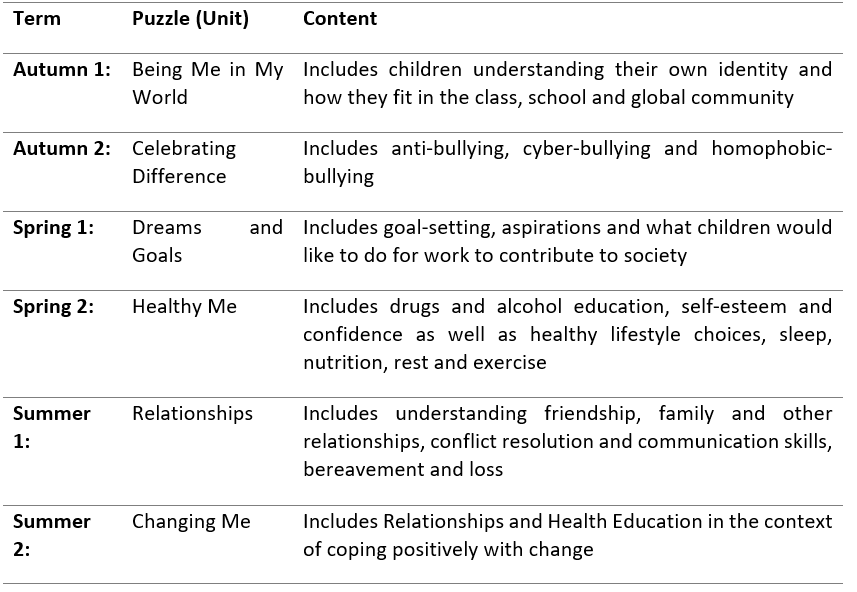
At Cotmanhay Junior School, we use a spiral curriculum that builds knowledge and skills year upon year. Lessons are delivered weekly and provide opportunities for mindfulness, discussion, collaborative learning and reflection. There are six puzzles in Jigsaw that are designed to progress in sequence throughout the year:
Autumn 1: Being Me in My World
Autumn 2: Celebrating Difference
Spring 1: Dreams and Goals
Spring 2: Healthy Me
Summer 1: Relationships
Summer 2: Changing Me
Each lesson offers offers opportunities for SMSC development, clearly mapped and balanced across each year group, alongside structured opportunities to practise and enhance the five skills associated with emotional literacy: self-awareness, social skills, empathy, motivation and managing feelings. During Spring 1, we also cover first aid as a statutory part of health education. Across school, pupils will learn how to call for help, how to check breathing and how to help someone choking. This is taught using the St John’s Ambulance Recommended First Aid Pathway. British Values and protected characteristics are developed at an age-appropriate level through PSHE lessons and assemblies. A range of teaching strategies including role-play, scenario-based learning and class discussions encourage collaboration.
The subject leader is responsible for monitoring the quality of teaching and learning of PSHE from year 3 to year 6. At our school monitoring is completed termly. During this time, the subject lead will conduct lesson observations and book scrutinies as well as draw conclusions through staff questionnaires and pupil voice.
British Values
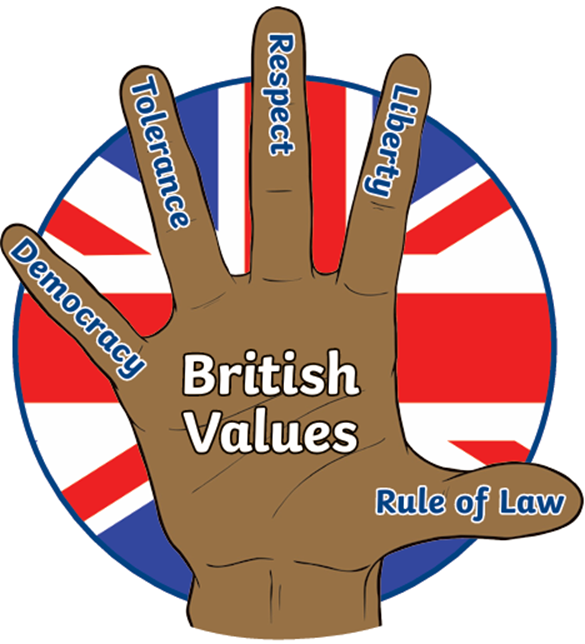
Democracy: making decisions together, for example through a pupil-elected school council
Rule of law: understanding rules matter and distinguishing between right and wrong, for example collaborating with children to create rules and codes of behaviour.
Individual liberty: freedom for all, for example reflecting on their differences and understanding we are free to have different opinions.
Mutual respect and tolerance: treat others as you want to be treated, for example sharing and respecting others’ opinions.
Protected characteristics
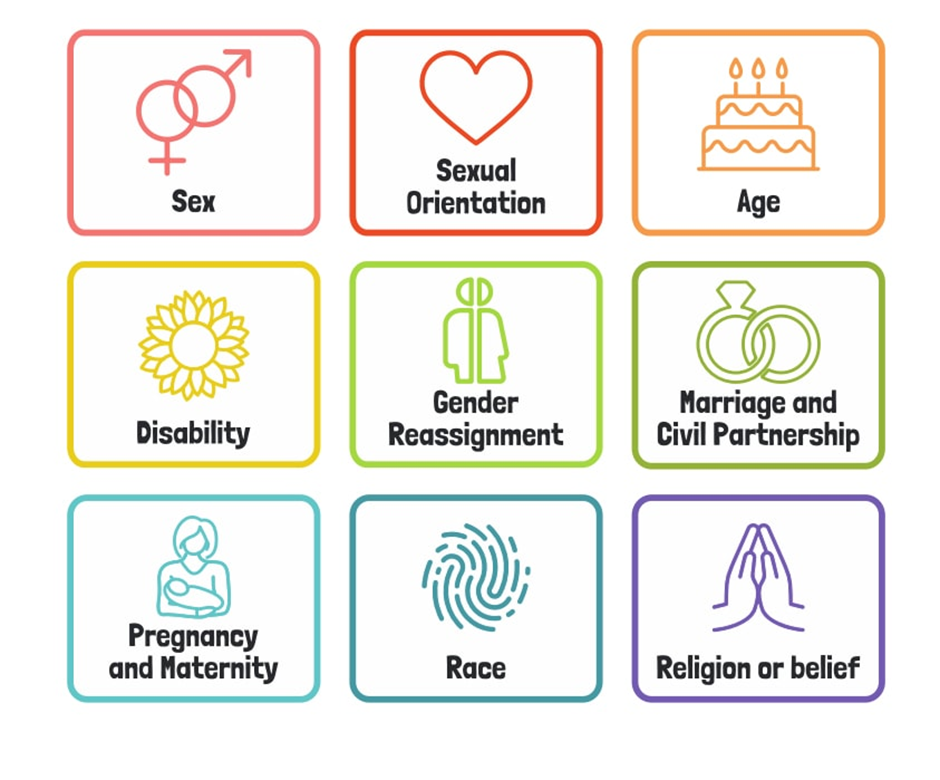
The Equality Act became law in 2010. It covers everyone in Britain and protects people from discrimination, harassment and victimisation. Everyone in Britain is protected. This is because the Equality Act protects people against discrimination because of the protected characteristics that we all have. Under the Equality Act, there are nine Protected Characteristics:
- Age
- Disability
- Gender reassignment
- Race
- Religion or belief
- Marriage or civil partnership
- Sex
- Sexual orientation
- Pregnancy and maternity
Age
A person belonging to a particular age (for example 32 year olds) or range of ages (for example 18 to 30 year olds).
Disability
A person has a disability if she or he has a physical or mental impairment which has a substantial and long-term adverse effect on that person's ability to carry out normal day-to-day activities.
Gender reassignment
The process of transitioning from one sex to another.
Marriage and civil partnership
Marriage is a union between a man and a woman or between a same-sex couple.
Same-sex couples can also have their relationships legally recognised as 'civil partnerships'. Civil partners must not be treated less favourably than married couples (except where permitted by the Equality Act).
Pregnancy and maternity
Pregnancy is the condition of being pregnant or expecting a baby. Maternity refers to the period after the birth, and is linked to maternity leave in the employment context. In the non-work context, protection against maternity discrimination is for 26 weeks after giving birth, and this includes treating a woman unfavourably because she is breastfeeding.
Race
Refers to the protected characteristic of race. It refers to a group of people defined by their race, colour, and nationality (including citizenship) ethnic or national origins.
Religion and belief
Religion refers to any religion, including a lack of religion. Belief refers to any religious or philosophical belief and includes a lack of belief. Generally, a belief should affect your life choices or the way you live for it to be included in the definition.
Sex
A man or a woman.
Sexual orientation
Whether a person's sexual attraction is towards their own sex, the opposite sex or to both sexes.